
Rethinking Dwarven Agriculture: A 2026 Revisit
Many years ago, I asked a question Tolkien, quite understandably, never spent a great many pages answering: What did the Dwarves eat? Here we aren’t talking about the cakes the Dwarves scoffed when visiting Bilbo, but more specifically, how did large Dwarven populations living within places such as Erebor and Khazad-dûm actually feed themselves?
It sounds mundane until you really begin thinking of these places as functioning cities rather than just magnificent halls in a story. Thousands of inhabitants require food every day. They need water, storage and waste disposal. Crops need soil and nutrients. Livestock needs fodder. Food must survive winter, shortages and siege.
And Dwarves do not appear to have surrounded their great mansions with miles of comfortable farmland. Their settlements were mountains. So how do you feed a city inside one?
When I first attempted to answer that question in 2012, I proposed enormous underground caverns, potatoes, reflected sunlight, subterranean water, fish and a carefully calculated cave food-chain involving several million bats. There was even bat milk.
Fourteen years later, I still think the question was good. The arithmetic behind the original article was not really the problem either. What deserves reconsideration is the idea that one enormous cave ecosystem should carry the burden of feeding an entire Dwarven city.
A Dwarven solution would surely be more engineered than that: not one underground farm, but an agricultural system built into the Mountain itself.
“We never bothered to grow or find food ourselves”
There is one obvious objection, and it is the same line with which the original article began. In Chapter 1 of The Hobbit, “An Unexpected Party,” while describing Erebor’s prosperity under his grandfather Thrór, Thorin recalls receiving:
“food-supplies, which we never bothered to grow or find for ourselves.”
At first sight, that appears fairly conclusive. Dwarves made things, Men grew things, and the two traded. For Erebor at the height of its prosperity, that may indeed have been largely true. But Thorin is describing one particular kingdom during an extraordinarily wealthy period of its history. The wording is also interesting. He does not say that Dwarves could not grow food, or that they had never done so. He says that they did not bother.
If neighbouring communities can supply enormous quantities of food, while your own workshops produce goods everyone desperately wants, there is little reason to devote valuable labour and underground space to producing everything yourself.
That tells us a great deal about prosperous Erebor’s economy. It tells us rather less about Dwarven civilisation across thousands of years. The Dwarves had existed for millennia before Dale. Their settlements were not always surrounded by prosperous and friendly communities. They endured migration, isolation, war and siege. Khazad-dûm itself had already existed for thousands of years before the relationship between Erebor and Dale. Obviously, those Dwarves ate. So if Dwarves possessed agricultural traditions of their own, which seems almost certain, it seems logical to find them within the mountain, not near the mountain.
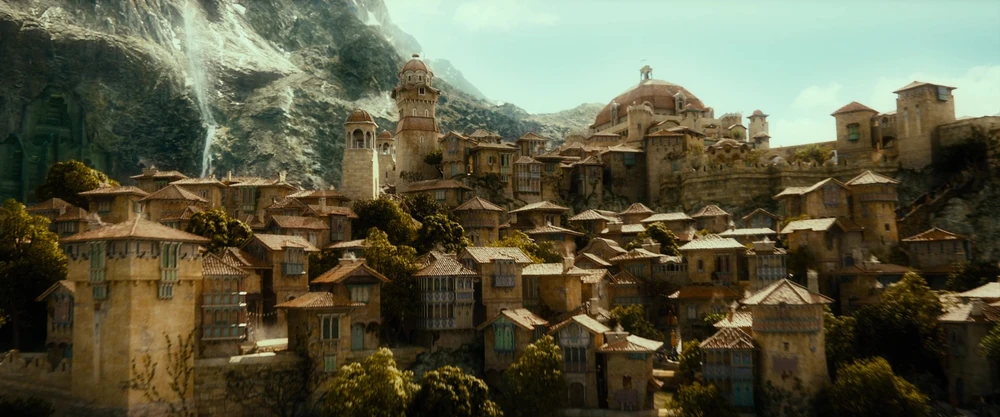
Building a Farm Inside a Mountain
We tend to imagine agriculture horizontally because that is how surface agriculture works. A field occupies a piece of ground, with another field beside it. A Dwarf need not think that way.
An agricultural chamber can have another chamber beneath it, and another beneath that. Water can move between them. Different levels can have different temperatures and humidity. Some can receive sunlight while others remain dark. The result need not resemble a natural cave with some vegetables planted in it.
Imagine instead enormous excavated chambers containing broad stone terraces filled with soil. Beneath those beds lie gravel and drainage channels. Water enters at the highest level and moves downwards under gravity, controlled by sluices. Excess water drains away rather than drowning the roots. Other chambers contain reservoirs, mushrooms, livestock, compost or stores. The Mountain becomes three-dimensional agricultural land. That solves space surprisingly well, but not the much greater problem: light.
Bringing the Sun into the Mountain
A single light-shaft simply would not do. Suppose the Dwarves cut a shaft through the eastern face of a mountain and align it perfectly with the morning Sun. For a brief period it works beautifully. Then the Sun moves.
Within an hour it has moved about fifteen degrees across the sky and the shaft is no longer aligned. Plants cannot survive on a few convenient moments each day when the Sun happens to shine directly through a hole in the rock.
Nor is the answer to perforate the entire Mountain with hundreds of differently angled shafts. Apart from the engineering involved, at some point Khazad-dûm begins looking less like a mountain and more like a piece of Swiss cheese. The shaft therefore cannot follow the Sun. The sunlight has to be made to follow the shaft, and that changes the entire system.
Following the Sun
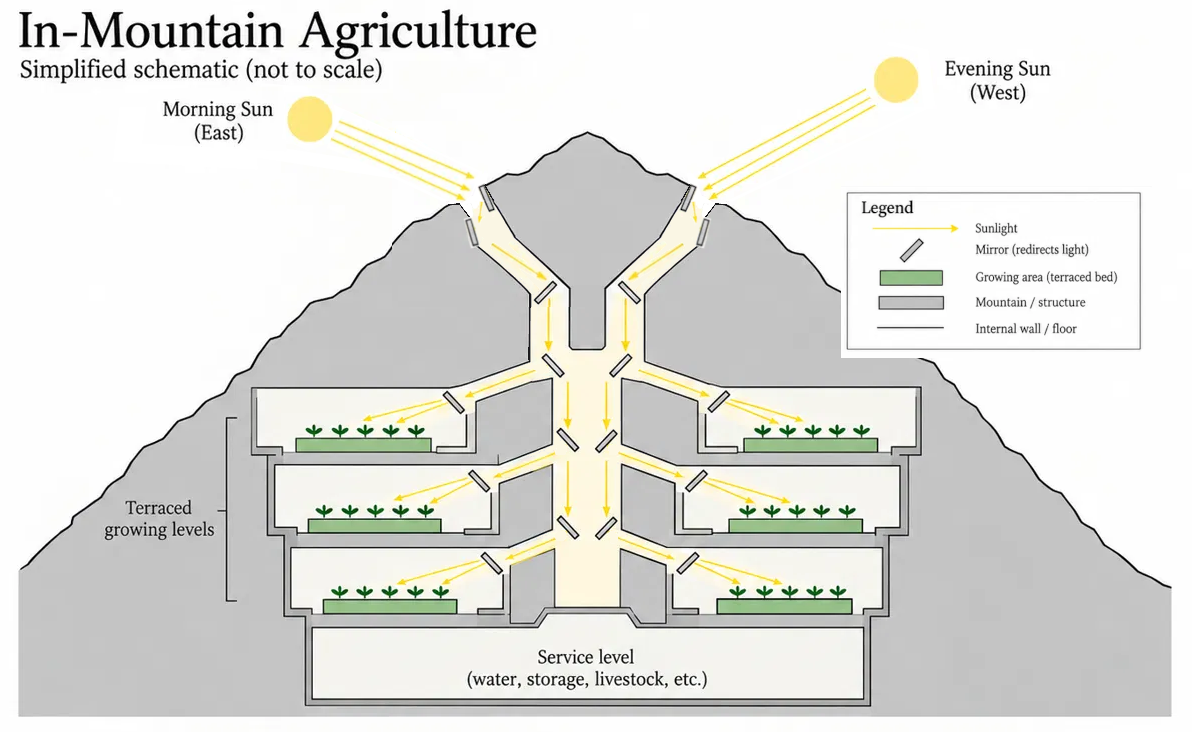
Imagine two principal solar installations, one on the eastern side of the Mountain and another on the western.
At first it is tempting to place great tracking mirrors outside on the mountainside. There is a problem with that, however. Tolkien never describes such mirror fields, although he does explicitly describe windows admitting daylight into Khazad-dûm. More importantly, a forest of exposed mirrors would be an extraordinary military weakness. An enemy would not need to enter the Mountain. Smash or obscure the collectors and, eventually, the farms would fail. So perhaps the most important mirrors were never outside at all. The windows themselves could have been the collecting apertures.
Behind a large eastern window, set safely back within the rock, a polished mirror could tilt and turn on two axes as the Sun crossed the morning sky. By continuously adjusting both its vertical and horizontal angle, it could keep the reflected sunlight aimed along the same fixed axis of the main lightway. The Sun moves. The mirror moves with it. The beam entering the Mountain remains in the same direction.
In the afternoon, equivalent windows and mirrors on the western side would increasingly take over. This is essentially the principle of a heliostat: a two-axis mirror that changes its orientation as the Sun moves so that the reflected light continues towards a fixed target. The Dwarven version would need no electronics. The solar path is predictable, and gears, shafts, counterweights and calibrated mechanisms could alter the mirrors gradually through the day, with operators possibly correcting the alignment and compensating for the seasons.
A fixed window does impose one important limit. The mirror can only collect sunlight while the Sun is actually visible through that opening. These would therefore not be small domestic windows, but broad, deeply recessed openings cut to command a useful arc of the sky. Eastern collectors would gather the morning Sun, western collectors the afternoon Sun, with their useful periods overlapping around the middle of the day.
Placing the machinery behind the windows also protects the expensive part of the system. From outside, one might see little more than a dark Dwarven opening in the rock. Several metres behind it sits the tracking mirror, and the light could immediately be turned away into a shaft protected by solid mountain. Heavy shutters could close the aperture in an emergency, while the mirror itself could rotate or withdraw behind stonework.
The windows would still be vulnerable to blockade or damage, of course, which is another reason not to make the Mountain dependent upon a single collector. Several independent windows on different faces, together with stored food and dark-growing crops, would provide the redundancy expected of a fortress.
There might even be Dwarves whose entire profession concerned maintaining this machinery: following the seasonal solar path, adjusting the mirrors, polishing the surfaces and keeping the lightways correctly aligned.
Tolkien also gives us an interesting scale on which to imagine the system. In his own sketch for The Lord of the Rings, he recorded Barazinbar, Caradhras, the Redhorn, at approximately 17,500 feet, or about 5,330 metres. Suppose, purely for illustration, that the principal collecting windows and agricultural district sat roughly halfway up such a mountain. That puts them somewhere around 2,665 metres above its base.
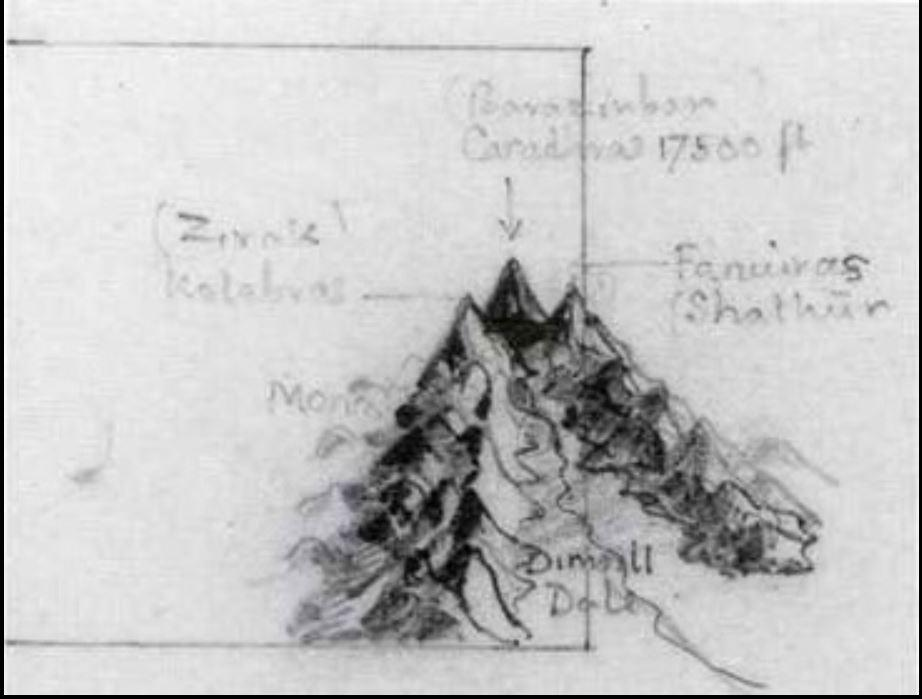
There is also a practical reason for placing the principal agricultural levels somewhere around the middle heights of the Mountain. Too high, and valuable space and water-storage capacity above them are lost; too low, and the lightways become unnecessarily long. At an intermediate level, much of the Mountain above can serve as a vast water catchment, feeding reservoirs and irrigation channels by gravity, while sunlight need only travel horizontally through part of the Mountain to reach the growing chambers. Warm, humid air can rise through ventilation shafts above, while water and harvested food can continue down towards the inhabited levels below. The middle heights therefore offer something of a natural compromise between light, water, ventilation, protection and transport.
Rather than carrying sunlight from the summit down to farms at the roots of the Mountain, the Dwarves could bring it through the eastern and western flanks at approximately the same elevation as the main agricultural complexes. The principal lightways would therefore run mostly into the Mountain. Morning light enters through the eastern windows. Afternoon light enters through the western ones. And the agricultural levels between them can enjoy something much closer to a full artificial day.
The system would, of course, remain dependent upon the weather. A heavily overcast day would greatly reduce the direct sunlight available to the collectors, just as it reduces the light available to crops outside. That need not threaten the harvest immediately. Plants can tolerate periods of poor light, although their growth slows, and the Dwarves could temporarily direct what useful daylight remained towards the chambers that needed it most. Several consecutive days of cloud would be an inconvenience; a prolonged period of exceptionally dark weather could become a genuine agricultural problem. That is another reason why no sensible Dwarven settlement would depend upon illuminated crops alone. Dark-growing foods, imported supplies and substantial stores would remain essential parts of the system.
The Great Lightways
There is still another problem. Even if a tracking mirror behind one of those windows keeps sunlight perfectly aimed into a fixed shaft, sunlight is not a laser. The Sun appears in our sky as a disc about half a degree across, so a reflected solar beam gradually spreads as it travels. A narrow, ordinary stone shaft would eventually swallow much of that light. So perhaps it was not ordinary stone.
Line the lightway with silver. Silver is one of the finest metallic reflectors of visible light. The structural shaft itself could remain stone, but its interior could be faced with carefully fitted and highly polished silver plates. Now, if the spreading edges of the beam reach the walls, they are reflected back into the shaft rather than absorbed by the stone.
This does not mean sunlight would ricochet wildly from side to side hundreds of times before reaching the farms. Quite the opposite. A well-designed Dwarven lightway would be broad, exceptionally straight and aligned so that the incoming light travelled almost exactly along its axis.
Consider a principal shaft five metres across. Because the solar beam spreads only gradually, a perfectly centred beam could travel hundreds of metres before its outermost rays first encountered the mirrored wall. Once reflected, they might travel another considerable distance before reaching the opposite side. Even across a lightway extending kilometres into the Mountain, we need not imagine dozens upon dozens of reflections, perhaps only a handful. That really is critical, because every reflection loses some light. Silver is excellent, but it is not perfect. The fewer reflections required, the more sunlight survives the journey.
The silver lining, for once quite literally, therefore serves less as a surface from which the entire beam constantly bounces and more as a safeguard around it, catching the gradually spreading edges and keeping them within the lightway while the main column of sunlight continues almost straight ahead. The lightways would also need to remain separate from the Mountain’s ventilation system. Clear glass or crystal panes could seal the collecting apertures, allowing sunlight through while keeping moisture, dust and forge smoke away from the polished silver surfaces within.
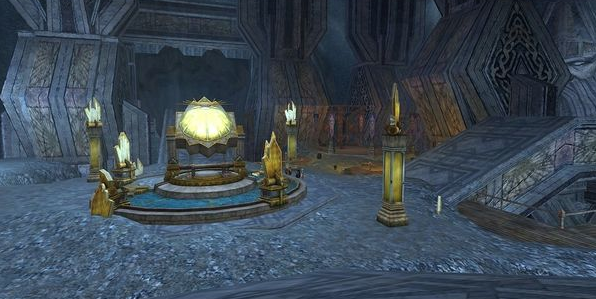
Though not described by Tolkien in exactly that manner, it is an interesting visual interpretation of Dwarves using mirrors and engineered devices to manipulate light within their underground halls.
Silver, and Perhaps Something Rarer
Silver would be an obvious Dwarven material for such a system. There is no need to imagine an entire shaft made from solid silver. Thin silver-faced plates mounted against precisely dressed stone would suffice, and individual sections could be removed for cleaning, polishing or replacement. That maintenance would be essential, because silver tarnishes and even small losses in reflectivity become significant when enormous quantities of sunlight depend upon them. The great lightways would therefore need to be kept dry, clean and isolated from smoke, forge fumes and ordinary traffic.
And then, inevitably, another Dwarven metal springs to mind: mithril.
There is no basis for claiming that mithril reflects light better than silver. Tolkien never tells us anything of the sort. He does, however, have Gandalf describe mithril as a metal whose beauty “did not tarnish or grow dim.” Nor would lining kilometres of shaft with mithril make the slightest economic sense, even in Khazad-dûm.
But the system would contain a very small number of components far more important than the general lining: the great receiving mirrors, turning mirrors and the precision reflectors that divide the incoming light between agricultural chambers.
That resistance to tarnishing would make small amounts of mithril especially attractive for critical tracking, turning or distribution components whose polished surfaces had to remain reliable for long periods. It still need not have been optically superior to silver, and lining kilometres of lightway with it would remain wildly extravagant, but using it at a handful of precision points becomes rather easier to imagine. Silver alone, however, is sufficient for the underlying idea.
Dividing the Daylight
Getting sunlight kilometres into a Mountain is only half the problem. The Dwarves still have to get it out of the main lightway and onto the plants, and this is where the most sophisticated part of the system may have been located. At intervals along the great lightways, distribution chambers could contain adjustable mirrors that intercepted only part of the incoming beam.
One reflector diverts a portion into a smaller side-shaft leading towards one agricultural complex, while the rest continues along the main lightway. Farther on, another portion is diverted elsewhere. Those smaller shafts could themselves be silver-lined, although their shorter distances make light loss much less troublesome.
The mirrors need not remain in the same position all day. The strongest light could be distributed between agricultural chambers according to a schedule: one group of terraces receives its strongest illumination during the early morning, later a reflector directs more of the beam towards another, around midday the distribution changes again, and during the afternoon the western lightway increasingly takes over. Sunlight is being managed almost like irrigation water. It enters through a few great channels, is divided into smaller ones, and is delivered where and when it is required.
Only at the very end of the journey should the Dwarves stop trying to preserve the beam. Above the agricultural terraces, a final system of reflectors could scatter the incoming sunlight across broad pale ceilings or multiple angled plates, producing diffuse illumination over the growing beds rather than one intensely bright spot. Every reflection and division, however, costs some of the original light. The deepest or most heavily redirected chambers would therefore favour shade-tolerant crops, while the brightest terraces nearest the principal lightways could be reserved for plants with greater demands. Large-scale grain cultivation would be particularly expensive in both light and space.
So the complete system becomes:
capture the sunlight → keep it aligned → carry it through the Mountain → divide it → distribute it → scatter it over the crops.
What About All That Heat?
There is, however, another consequence of bringing large quantities of sunlight into a mountain: sunlight carries energy, and eventually almost all of that energy becomes heat.
Bright direct sunlight delivers roughly a kilowatt of solar energy per square metre. If several large collecting windows are feeding one of the Mountain’s lightways, the amount of energy being transported could therefore be measured in hundreds of kilowatts or even megawatts. The silver-lined shaft itself need not become an oven simply because light passes through it. Most of the beam travels through the air, and if it is well aligned it may touch the reflective walls only a few times. The greater heating would occur at the tracking mirrors behind the windows and at the receiving and distribution mirrors deeper within, where a small percentage of the light is absorbed with each reflection, and ultimately in the agricultural chambers themselves, where plants, soil and stone absorb the incoming sunlight.
That creates a problem, but also an opportunity. Agricultural chambers already require ventilation to control temperature, humidity and the exchange of gases. Warm air naturally rises, so shafts extending from the growing levels towards higher parts of the Mountain could create a natural draught: cooler air enters through lower passages, crosses the agricultural chambers, and warmer, wetter air escapes through vents above. Adjustable shutters and dampers could regulate that flow and prevent the growing levels from overheating.
Water could provide a second means of controlling the heat. Channels passing behind the most heavily illuminated reflectors could keep them from becoming too hot, with the warmed water then carried elsewhere through the agricultural complex. Reservoirs, soil and the surrounding mass of stone would absorb further heat and release it gradually afterwards. Deep within the Mountain, however, temperatures would already remain comparatively stable throughout the year, perhaps around 12°C, so the problem would not be keeping the farms warm through winter. If anything, the greater concern would be preventing the imported solar energy from pushing them too far above that natural baseline.
The Dwarves would still need to treat the lightways with considerable respect. A concentrated solar beam striking the wrong place could ignite timber, straw or stored food very quickly. The main shafts and distribution chambers would therefore sensibly be built almost entirely from stone and metal, isolated from ordinary passages, with shutters capable of blocking the incoming light in an emergency.
Winter would present a different problem: as explained, not necessarily cold within the Mountain, but water, as snow and ice above could temporarily reduce the flow replenishing its reservoirs. That makes storing and managing water every bit as important as managing the sunlight itself.
Water, Soil and the Agricultural Cycle
Once the light problem is solved, most of the remaining problems are comparatively familiar. A civilisation of miners must understand water moving through rock, if only because miners who don’t understand it tend not to remain miners for very long.
Rain, snowmelt and springs could feed reservoirs high within the Mountain. From there, gravity carries water through the agricultural levels. A main channel enters a chamber. Smaller channels supply individual terraces. Sluices regulate the flow. Beneath the soil, gravel beds and drains remove excess water and return it to lower channels or reservoirs.
The same principle applies to fertility. The initial soil would largely have to come from outside, but once it had been hauled into the Mountain it would become a valuable resource to preserve. A city of thousands produces an enormous amount of organic material: food scraps, manure, straw, spoiled food, brewing waste, plant remains and ash.
Instead of throwing it away, the Dwarves would no doubt compost it. Nutrients move back towards the growing chambers while food moves towards the inhabited halls and waste in the opposite direction. The Mountain becomes a cycle rather than a one-way system. Which brings us, once again, to the bats.
About Those Bats…
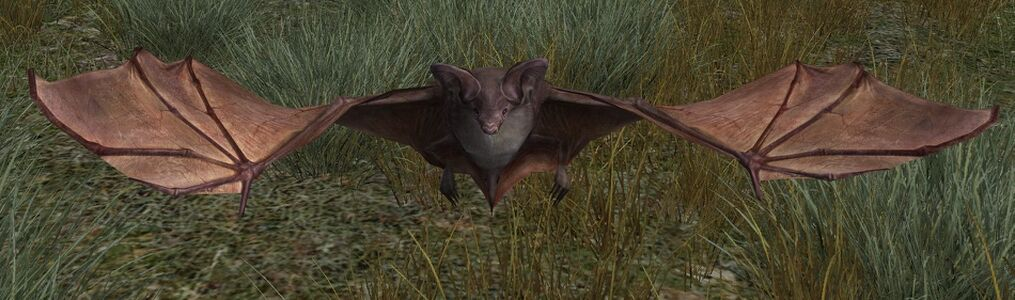
The original article placed bats rather enthusiastically near the centre of the Dwarven food supply. I no longer think we need several million of them on the menu, but they may still be surprisingly useful. Bat colonies leave the Mountain to feed over a wide area and return to their roosts, where they deposit guano rich in useful nutrients.
A Dwarven settlement might therefore deliberately tolerate or encourage colonies in natural caverns connected to the outside but separated from inhabited areas. The bats go out, feed, return, and the Dwarves collect the guano. In effect, they are gathering nutrients outside the Mountain and delivering some of them directly into the agricultural system.
That makes considerably more sense to me than constructing an entire food pyramid whose ultimate purpose is to fry the bats, though I am still not ruling out the occasional crispy fried batwing.
What Grows in the Dark?
Not every agricultural chamber needs the great lightways. Mushrooms are the obvious example. They can grow without sunlight and can occupy chambers far deeper inside the Mountain. Growing racks could also be stacked vertically, making exceptionally good use of otherwise unproductive space. They are not, however, a replacement for grain. Mushrooms contain a great deal of water and comparatively few calories. Their value is that they produce edible food in darkness and can make use of organic substrates that would otherwise have little value as human or Dwarven food.
Fish could similarly make productive use of reservoirs and purpose-built pools, although they too require feed and cannot simply create calories from water.
Livestock would probably be limited because keeping large herds permanently underground consumes both space and fodder. Smaller numbers of goats, sheep, pigs and poultry are much easier to imagine, with perhaps even some animals grazing outside when rare circumstances allow.
The brightest agricultural chambers would be reserved for plants for which sunlight is worth spending. Roots and tubers could provide substantial yields, legumes provide food while contributing to soil fertility, and leaf vegetables and herbs occupy relatively little space. Grain remains enormously useful because it is calorie-dense, stores well and can become both bread and beer. It is also precisely the sort of crop prosperous Dwarves might prefer to buy.
Three Million Kilograms of Food
For continuity with the original article, let us keep its hypothetical population of 8,000 Dwarves. Tolkien never gives us a census of Erebor, so that number is illustrative, not canonical.
The original calculation assumed 1.1 kilograms of food per Dwarf per day:
8,000 × 1.1 kg × 365 = 3,212,000 kg
So our imaginary Dwarven city consumes just over 3.2 million kilograms of food every year. That calculation remains useful for showing the scale of the problem. It should not, however, be mistaken for a nutritional model. A kilogram of mushrooms and a kilogram of grain weigh the same but provide radically different amounts of energy.
If we instead use a human requirement of roughly 2,500 to 3,000 calories per day merely as a comparison, 8,000 inhabitants require something in the region of 7.3 to 8.8 billion calories every year. We obviously do not know whether Dwarves actually require human quantities of food energy. The point is scale: feeding thousands of people requires an enormous amount of calorie-dense food. And that explains something rather neatly.
Why Thorin’s Dwarves “Never Bothered”
Of all the things a Dwarf might grow underground, grain is among the least attractive. It needs considerable illuminated area, while being dry, durable and comparatively easy to transport.
If Dale can supply tonnes of grain cheaply in exchange for Dwarven metalwork, dedicating precious sunlit chambers to growing the same grain becomes poor economics. To put the scale into perspective, supplying most of the caloric needs of 8,000 inhabitants through imported grain could easily mean well over a thousand tonnes arriving each year. Thorin’s casual reference to “food-supplies” may therefore conceal a truly enormous trade network.
So prosperous Erebor might import grain, fruit, wine and large quantities of other food while continuing to produce things particularly suited to the Mountain: mushrooms, fresh vegetables, roots, fish and perhaps smaller amounts of meat, milk and eggs. Or its internal agricultural production might have declined much further still. Thorin’s statement allows that possibility.
The important distinction is between using agricultural capacity and possessing the knowledge or infrastructure to produce food when necessary. A remote Dwarven settlement might operate its agricultural chambers at full capacity, while a wealthy Erebor surrounded by trading partners might not. If trade fails, old chambers can be returned to cultivation, which seems particularly sensible for a people whose homes are also fortresses.
The Mountain as Storehouse
The Mountain offers another advantage that may be almost as important as growing food within it: storage.
Dry, ventilated chambers can hold grain, cool chambers preserve roots, and other rooms can age cheese, cure meat, dry fish and fruit, malt grain or ferment vegetables. Beer can be brewed in great quantity, imported wine can mature in stable conditions, and different chambers can be engineered for different temperatures and humidity.
A great Dwarven kingdom might therefore maintain reserves measured not merely in weeks, but in seasons or even years for the most durable foods. That means agriculture, trade and storage should not be treated as competing explanations for how Dwarves ate. They are parts of the same system: grow what the Mountain produces efficiently, import what the surface produces more efficiently, and store enough of both to survive when the road outside becomes unreliable.
Agriculture as Dwarven Craft
Tolkien’s Dwarves are craftsmen, but craftsmanship need not stop at metal and stone. A Dwarven farmer working inside a mountain would be doing something fundamentally Dwarven. His field is carved from rock. Its soil has been assembled. Its water follows channels cut to precise gradients. Its drainage runs beneath it. Its temperature, humidity and airflow can be regulated. And above it shines sunlight that entered the Mountain through distant windows, was caught by moving mirrors hidden behind them, directed into a silver-lined lightway and divided through a network of reflectors until it finally reached this particular terrace.
Once all of those conditions can be controlled, it seems extremely unlikely that the Dwarves would simply plant crops and just hope for the best. If every square metre of imported soil was valuable, they would surely try to discover exactly how to make it produce as much as possible.
Neighbouring terraces could therefore be used to test the same crop under slightly different conditions. One might receive more light, another less. Watering could vary, as could soil depth, drainage, temperature, humidity or planting density. The resulting harvests could be compared, recorded and the most successful combination repeated elsewhere.
Over generations, this could produce remarkably precise agricultural knowledge. A particular barley might be known to perform best under one balance of light and moisture, while a root crop preferred another. New crops or varieties could first be tested in dedicated chambers before being introduced into the wider agricultural levels.
The growing chamber could therefore be tuned to the crop, rather than the crop merely being forced to accept the chamber.
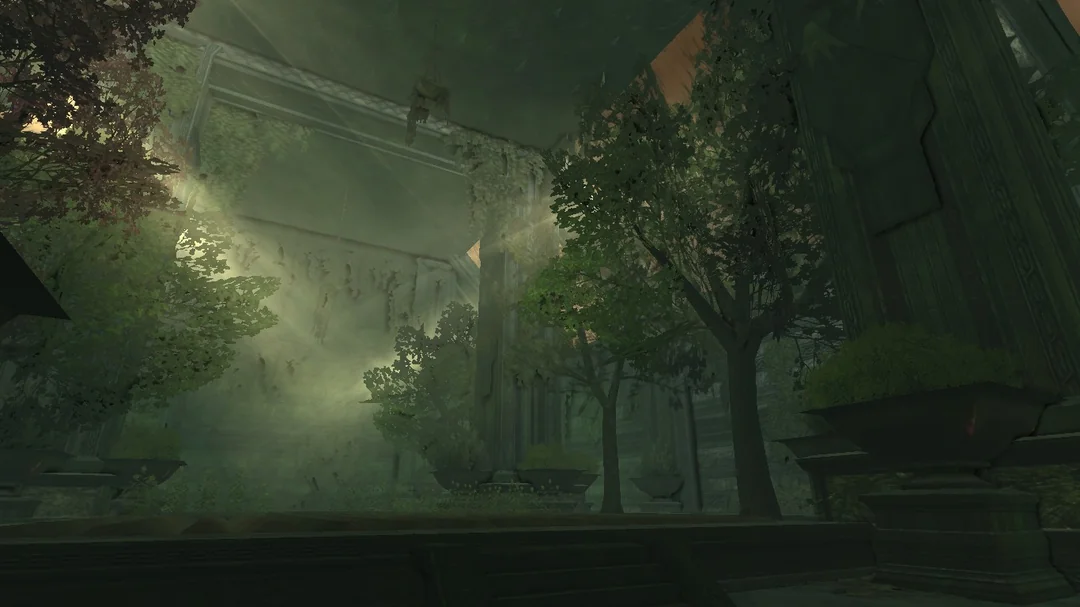
That is not Dwarves copying the agriculture of Men beneath the ground. It is agriculture transformed into Dwarven craft: measured, tested, refined and engineered for the greatest possible return from the limited space available.
So… Crispy Fried Batwing?
Perhaps, but probably not by the million.
Almost everything proposed here remains speculative. Tolkien tells us that prosperous Erebor obtained food through trade. He does not describe underground farms, silver-lined solar shafts, mushroom galleries, irrigation terraces or Dwarven heliostats. Those are attempts to answer a question he left open. But I think the question is better approached now than I approached it fourteen years ago.
Much of this agricultural world likely existed beyond the parts of a Dwarven city that outsiders ever saw: vast terraced chambers carved into the Mountain, supplied by reservoirs and irrigation channels, with daylight carried deep through the stone where it was needed. Other levels could remain dark, given over to mushrooms, storage, brewing and preservation, while food, water, waste and nutrients moved through the Mountain as parts of one carefully managed system.
Not an agricultural landscape spread around the Mountain, but one engineered and built into it, level below level. A farm built as only Dwarves would build one, carefully designed and engineered not upon or beside the Mountain, but within it.
And somewhere, presumably, a Dwarf was still frying a bat.
A Note on Sources and Speculation
The distinction between Tolkien’s writings and my reconstruction deserves a bit of light (pun intended).
Thorin’s statement that his people “never bothered to grow or find food ourselves” comes directly from The Hobbit, Chapter 1, “An Unexpected Party”; the fuller line reads, in full, “food-supplies, which we never bothered to grow or find for ourselves.” The hypothetical population of 8,000 Dwarves and the resulting food calculations do not come from Tolkien; they are this article’s own illustrative assumption, carried over from the 2012 original for continuity.
Tolkien’s own sketch, reproduced in Hammond and Scull’s J.R.R. Tolkien: Artist and Illustrator, records Barazinbar (Redhor, Caradhras) at approximately 17,500 feet/5300 meters, giving us a genuine and useful sense of the extraordinary scale of the Mountains of Moria. Placing agricultural works halfway up such a mountain is this article’s illustrative assumption, not Tolkien’s.
Tolkien does describe daylight entering Dwarven spaces through windows, including the high eastern windows of the First Hall in Khazad-dûm. He gives us no description, however, of the solar system proposed here. The idea that some such windows concealed tracking mirrors, silver-lined lightways and distribution reflectors is speculative engineering intended to test whether substantial cultivation within a Dwarven mountain could plausibly work.
The same applies to the proposed reservoirs, irrigation works, mushroom cultivation, fish pools, livestock arrangements and use of bat guano. Mithril deserves an especially large asterisk. Tolkien never tells us that it possesses superior optical properties, but he does describe it as a metal whose beauty “did not tarnish or grow dim.” Using that canonical resistance to tarnishing as a reason for placing small amounts in critical optical components remains speculation, but it is at least speculation anchored in a property Tolkien actually gives the metal.
The bats are equally speculative, of course, but perhaps less fanciful than they first appear. A large colony living within the Mountain would already be importing nutrients from the outside world every night and depositing them conveniently underground. For Dwarves trying to make the most of a closed agricultural system, ignoring such a resource would seem rather wasteful.
Whether that also occasionally ended with a crispy fried batwing is another question entirely.


